

Wall Street Is Down on the Dollar as Trade Unease Lingers
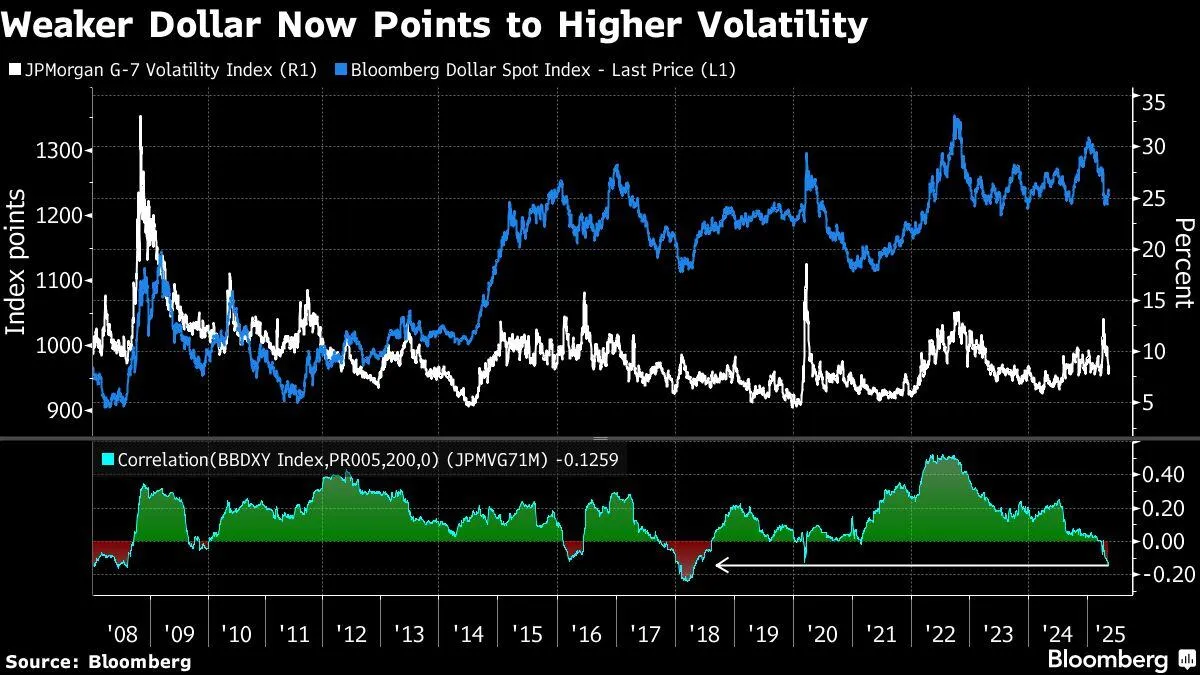
The Bearish Outlook on the US Dollar Amid Economic Uncertainty
In a week marked by a significant rally in US stocks and fading recession fears, currency traders remain pessimistic about the American dollar. Despite positive movements in equities, the greenback continues to struggle, with strategists from major financial institutions like JPMorgan Chase & Co. and Deutsche Bank AG predicting further declines. The dollar index remains near its April lows, reflecting persistent concerns over US economic policy and global trade tensions.
Why the Dollar Is Under Pressure
The US dollar has experienced one of its worst years in decades, dropping more than 6% in 2025 against a basket of major currencies. Several key factors contribute to this decline:
- Unpredictable US Policymaking – Investors remain wary of erratic economic policies, including trade negotiations and fiscal decisions.
- Federal Reserve’s Wait-and-See Approach – The Fed’s reluctance to aggressively adjust interest rates has diminished the dollar’s appeal.
- Suspicions of a Weaker Dollar Strategy – Some analysts believe the Trump administration may be tacitly supporting dollar depreciation to boost US manufacturing.
Kristina Campmany, a senior portfolio manager at Invesco, notes:
“The combination of lower growth, stickier inflation, and a neutral Fed, coupled with continued US policy uncertainty, should keep the dollar on the backfoot.”
Options Market Signals Further Decline
Bets against the dollar in the options market have surged to their highest levels since 2020, indicating long-term bearish sentiment. These positions, typically held by institutional investors rather than short-term speculators, suggest a broader reassessment of dollar exposure.
Kamakshya Trivedi, head of global currencies at Goldman Sachs Group Inc., stated on Bloomberg TV:
“US exceptionalism is eroding gradually, and these moves have longer to run.”
Stock Market Rally vs. Dollar Weakness
While the S&P 500 surged over 5% this week—fueled by optimism over US-China trade talks and subdued inflation—the dollar’s gains were short-lived. After a brief rally, the greenback gave up most of its advances, reinforcing the view that its weakness is structural rather than temporary.
Jitania Kandhari, deputy chief investment officer at Morgan Stanley Investment Management, predicts:
“We are past peak US exceptionalism, and it will be a multiyear trend.”
She forecasts another 6% depreciation in the dollar this year.
Global Capital Shifts Away from the Dollar
George Saravelos, Deutsche Bank’s global head of currency strategy, highlights a slowdown in foreign inflows into US assets. Countries like Taiwan are reassessing their exposure to US Treasuries, which could further weaken demand for the dollar.
A key indicator of this shift would be a decoupling of US Treasury yields and the dollar, where yields rise while the dollar falls—particularly against the Japanese yen, given Japan’s significant holdings of US debt.
Emerging Markets Benefit from Dollar Weakness
Investors are increasingly turning to emerging market currencies, such as the Korean won and Indonesian rupiah, as alternatives to the dollar.
Mark Nash of Jupiter Asset Management observes:
“Asia is now at the forefront of a global repatriation theme. Investors are taking their capital back from the US.”
Derivatives Market Reflects Bearish Sentiment
Data from the Commodity Futures Trading Commission (CFTC) shows that speculative traders remain heavily bearish on the dollar, with $16.5 billion in short positions as of May 13. While there has been a slight reduction in bearish bets, the overall sentiment remains negative.
Conclusion: A Multi-Year Decline for the Dollar?
The US dollar’s struggles appear far from over. With persistent policy uncertainty, slowing foreign investment, and a shift toward emerging markets, the greenback could face continued depreciation. While equities may rally, currency traders remain cautious, signaling that Wall Street’s bearish outlook on the dollar is here to stay.
For investors, this trend underscores the importance of diversifying currency exposure and considering alternative assets in a shifting global financial landscape.